Identity
Face and fingerprint recognition, access control, and attendance capture connected to the workflows they serve.
What identity means here
Identity is not a match on its own. A face or a fingerprint is only worth capturing because of what happens next — the access it permits, or the operational record the verified event creates.
Which of those it is depends on the operation. The identity event connects to the workflow the operation actually requires, and not every deployment needs the same one.
Capabilities
- 01Biometrics
- BioScan terminals we ship, install, and support ourselves.Face · Fingerprint · ID — three ways to be recognised, so the one that suits the site is the one you use.
- 02Access control
- Combines facial recognition, fingerprint scanning, RFID, PIN, and password for flexible, high-security access.Mounting: desktop, wall, turnstile.
- 03Attendance
- Attendance capture and payroll processing in one flow, with face and fingerprint check-in through BioScan hardware.Shifts, leave, and overtime in the same record.
From identity event to operational record
This is the whole of the discipline in one run: somebody is recognised at a terminal, and what the terminal produces is the record the rest of the operation works from.
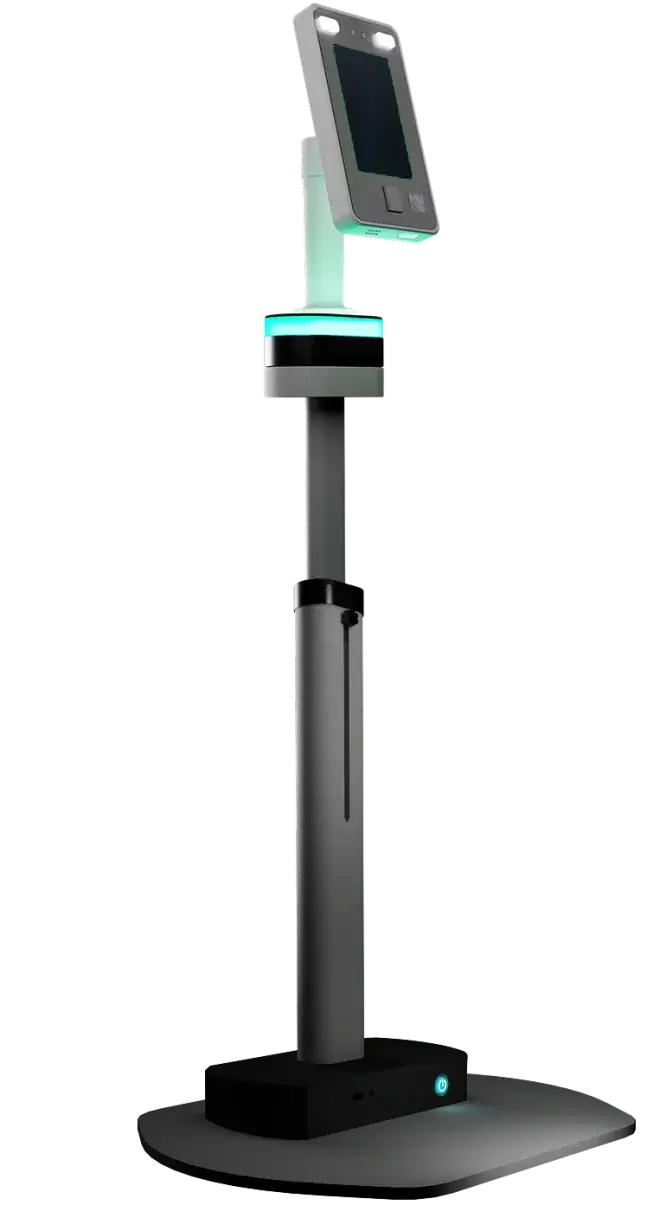
- 01Face and fingerprint check-in
- 02Attendance record
- 03Shifts, leave, and overtime
Payroll
The terminal shown is a product render. Sixpent has not published photography of a client installation.
Selected identity work
Smart Attendance with Payroll
Workforce · Software and Web Applications
Attendance capture and payroll processing in one flow, with face and fingerprint check-in through BioScan hardware.
BioScan
Access control · Hardware
Combines facial recognition, fingerprint scanning, RFID, PIN, and password for flexible, high-security access.
Two, because two are documented. BioScan is the product; Smart Attendance is the documented workforce system it connects to.
Where identity meets software
The entry captured at the door becomes the attendance record used by scheduling and payroll, connecting the physical event directly to the workforce workflow.
Identity captured the event; software carried it the rest of the way. That is two disciplines in one engagement because the operation needed both — not a claim that every engagement needs all three.
When identity is the place to start
- Attendance, shifts, biometrics, and payroll need to remain connected instead of becoming separate records.
- Stop reconciling timesheets by hand
- Read at once, not in a queue: five people approaching together are five people through.